


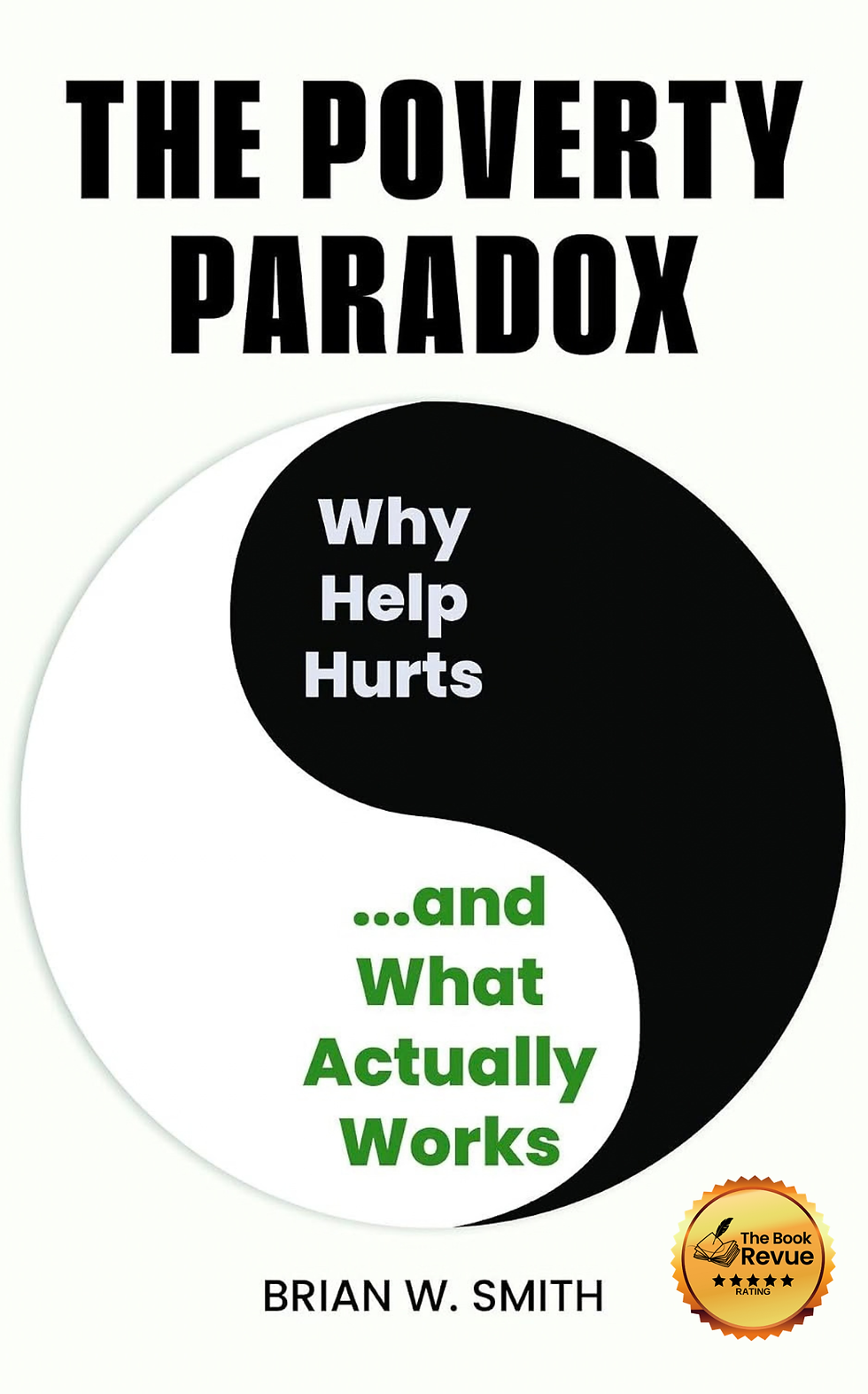
The Poverty Paradox: Why Help Hurts and What Actually Works
5 Star Review
Click HERE to Purchase Your Copy Today!
Editorial Book Review:
By Dar Dowling
Brian W. Smith did not arrive at the subject of poverty through research. He arrived through a front door he walked through repeatedly over years, drawn into the life of a sprawling family riddled with addiction, theft, and prostitution, watching one member after another struggle to break free from cycles that no government program had managed to interrupt. Many didn't make it. That experience, raw and personal and completely unsparing in how it is described here, is what gives The Poverty Paradox its moral weight and its credibility.
The paradox the title names is one that statistics have been pointing at for decades without producing adequate answers: the United States is the wealthiest country in human history, and yet its poverty rates and inequality levels are among the highest of any comparable nation. Trillions of dollars in antipoverty spending. Countless programs, initiatives, and interventions. And the conditions surrounding poverty, in many communities, have not improved or have quietly worsened. Smith asks the question that most policy conversations avoid because the answer is uncomfortable: what if much of what we call help is actually making things worse?
His answer draws on both the family he witnessed and years of serious study, and the combination gives the book its unusual texture. This is not a think-tank report and it is not a trauma memoir. It is both, and the movement between personal narrative and research-backed analysis is what makes the argument land with such force. The connection he traces between poverty and education, and his conclusion that expanding educational opportunity for children from birth is the most powerful anti-poverty investment available, is neither a left-wing nor a right-wing conclusion. It is a human one, and he makes it without the ideological armor that usually shows up in books about poverty.
For anyone seeking a clearer, more honest understanding of what poverty actually is in America and what has the best chance of actually changing it, this book is a necessary and genuinely courageous starting point.
Comments